Our Eco-Friendly Processes
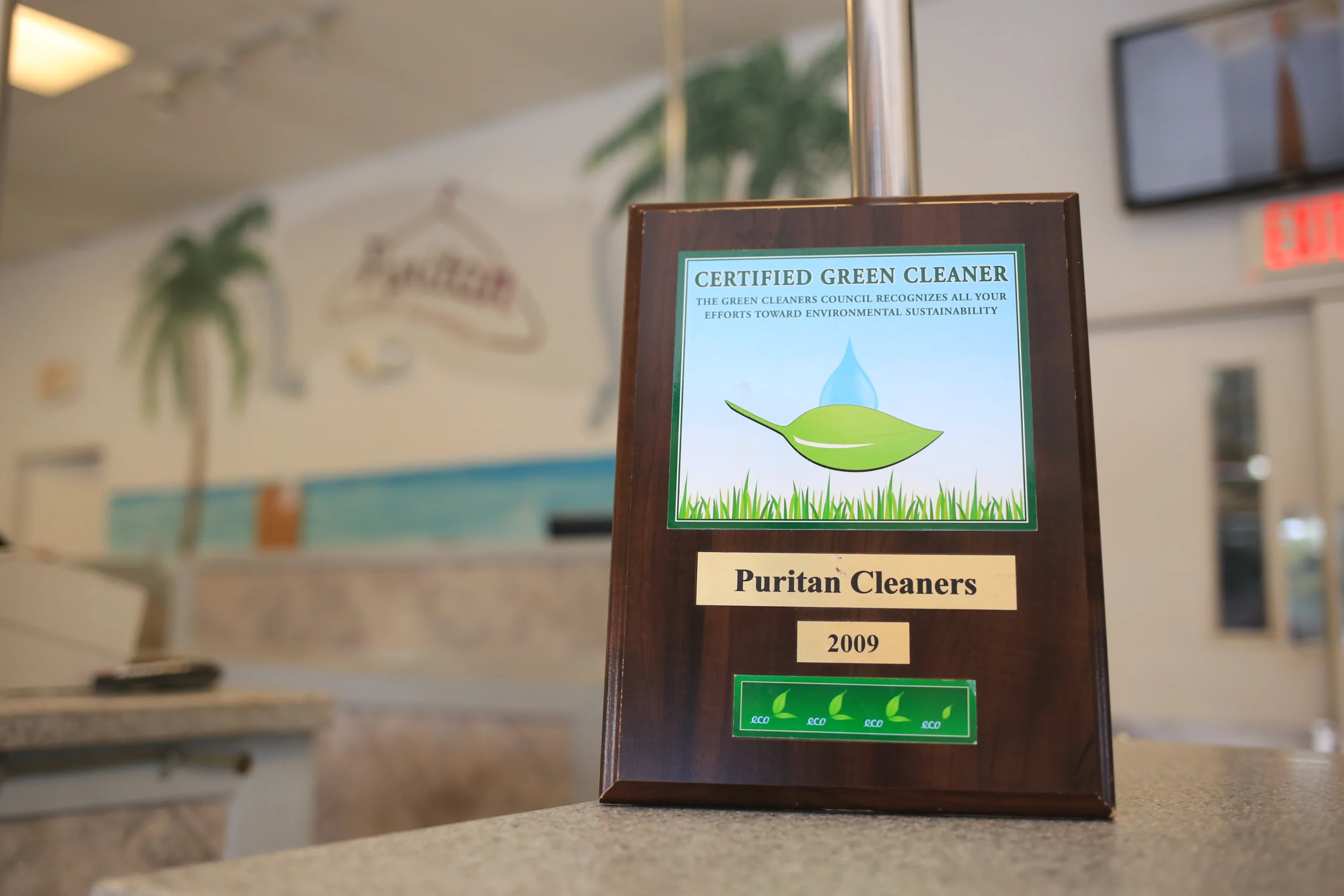
Puritan is proud to be Palm Beach County’s first Green Certified Dry Cleaner. Our 90% non-toxic process uses organic solvents and advanced wet cleaning to protect your garments and the environment. From hanger recycling to energy and water conservation, every step of our service is designed with sustainability in mind.

"Perc" Free Dry Cleaning
Organic Dry Cleaning, Safer for You and the Planet
Puritan leads the way in eco-friendly dry cleaning for customers in Tequesta, Florida by eliminating PERC, the toxic solvent still used by most traditional cleaners. Instead, we use advanced wetcleaning and organic solvents to protect your garments and your health.
- Certified Green Cleaner, first in Palm Beach County
- Completely non-toxic and hypoallergenic
- No harsh chemical smells left behind
Category
Traditional Cleaning (PERC)
Purtian Cleaning
Health Impact
Classified as a probable carcinogen; can irritate skin, eyes, and lungs.
Gentle on skin, hypoallergenic, and safe even for sensitive users.
Odor
Clothes often retain a strong chemical smell.
Garments return fresh, clean, and odor-free.
Environmental
Considered hazardous waste; pollutes air, soil, and water.
Breaks down naturally into sand, water, and CO₂ with no harmful residue.
Garment Care
May weaken fibers and cause colors to fade over time.
Protects fabrics, maintains color, and helps extend garment life.
Regulation
Tightly regulated and being phased out due to safety risks.
EPA-approved, sustainable, and widely recognized as eco-friendly.
Comparing traditional dry cleaning to our Green Process
Who Loves Our Organic Cleaning
Health-conscious customers, allergy sufferers, and families with sensitive skin choose us for a reason. Our perc-free, low-impact cleaning process respects both your body and your wardrobe.
- Sensitive skin & fragrance allergies
- Families with babies and kids
- Eco-aware consumers
- Wellness-focused professionals
Pickup and Delivery Service Areas
See If We Deliver organic dry cleaning to your area!
- Tequesta
- Palm Beach Gardens
- Jupiter
- North Palm Beach
- Palm Beach
- Juno Beach
- Hobe sound
- Lake Park
- Singer Island
- Riviera Beach
- Palm Beach Shores
- West Palm Beach
- Staurt
- Abacoa
- Jupiter Farms
- Mangonia Park
- Port Salerno
- Sewall’s Point
- Palm City
- And Beyond!
FAQ
FAQs about our eco-friendly processes
PERC (perchloroethylene) is a petroleum-based solvent that has been the industry standard for decades because it is cheap and effective at dissolving grease.
The downside is significant. PERC is classified as a hazardous chemical, linked to respiratory irritation, skin sensitivity, headaches, and long-term health concerns with repeated exposure. It also leaves chemical residue in fabrics and releases vapors into the air during cleaning and storage.
Many cleaners still use it because switching systems requires investment, training, and process changes.
Yes and in many cases, it’s more effective.
Modern wet cleaning systems allow precise control over water temperature, agitation, and drying, which means stains like perspiration, sugars, salts, and food residues are removed more thoroughly than with solvent-only cleaning.
Traditional PERC cleaning is good at oils but poor at water-based stains. Our process addresses both.
That “dry cleaning smell” is not freshness - it’s chemical residue.
PERC binds to fabric fibers and slowly off-gasses over time. That odor is the solvent evaporating. With PERC-free cleaning, garments come back neutral-smelling, because there is no petroleum solvent left behind.
This is one of the first differences customers notice.
Absolutely.
Because we eliminate harsh petrochemicals, there is far less residue left in clothing. This makes PERC-free cleaning ideal for people with:
Sensitive skin
Allergies or asthma
Chemical sensitivities
Children’s and baby clothing
Many customers switch to Puritan specifically because traditional dry cleaning causes irritation or headaches.
Harsh solvents break down fibers over time. You may not notice it immediately, but repeated exposure causes:
Fabric thinning
Color fading
Loss of structure in tailored garments
Gentler chemistry combined with fabric-specific cleaning extends the life of garments, especially suits, dresses, and natural fibers like wool and silk.
Yes, and in multiple ways.
PERC is considered a groundwater contaminant and an air pollutant. Eco-friendly cleaning systems significantly reduce:
Chemical waste
Air emissions
Water contamination
At Puritan, eco-friendly cleaning also includes operational practices like water efficiency, energy conservation, and recycling programs, making the process cleaner from start to finish.